Thursday, July 30, 2009

Max Baucus, Point Man

The focal point of the health care debate is focused on the Senate Finance Committee chaired by Sen Max Baucus(D-MT).  After reading a couple of profiles of Senator Baucus, I have thought about him and the process, and this my guess as to why we are where we are in the debate.

Senator Baucus has made a career of straddling the middle.  He supported the Bush tax cuts and the Iraq War.  When the Republican passed the Medicare drug bill the only two Democrats allowed into the room during negotiations were Sen. Baucus and another moderate Democrat Sen. John Bruex(D-La).  However, Baucus led the way when congressional Democrats successfully fought Bush's plans for Social Security.

As I look at this record my sense is Baucus is a conservative in the traditional sense.  He doesn't want radical change but he will fight tooth and nail to protect what already exists.  The questions then are does health care reform require radical reform, and is the electorate calling for change?

The article from the Missoula Montana paper quotes a former Baucus aide saying, "I think we've reached a juncture, probably in history, where there's a difference between hard work and leadership.  And Max needs to show that... he can get a good bill passed through leadership, not just hard work.  If he wants to be remembered he needs to provide the leadership to solve this problem."

I 'm not sure that a person whose instincts are conservative can bring the required leadership for health care reform.  Even though the proposal is not very radical because it still keeps the anachronistic employee based health system, it still contains the seed to grow into a radical change of our health care system.  Baucus either cannot see this or wants to bring reform reform through tweeking the current system.  

However, the path of the current system is unsustainable.  More people will become uninsured and more insured people will be risking bankruptcy if they should have a major medical need.  Businesses will offer health insurance that covers less and less and continue to provide stagnant wages because health benefits eat the compensation packages.  The current proposals are a compromise from progressives desires for a single payer.  The current proposals do provide a way for more progressive options to be visited at a later date.  

Baucus' instinctual conservative view means he sees tweaking the current system is the answer, which would make harder to grow his plan in more progressive direction  and one day might require a more extensive overhaul.  Also, Sen. Baucus's conservative political instincts means he is misreading the political winds.  He cam of age in a era of Republican ascendency but is in an era of Democratic ascendency.  His sidelining of the more liberal members of committee means he risks losing big and bring the whole package down.  Chairman Baucus even locked the chair of the Health sub-committee Sen Jay Rockefeller out of the negotiations. 

Baucus' method of leading a group of centrist Democrats and Republicans means he misread the situation.  He should have led negotiations beteen more liberal Democrats and centrist Democrats to get a bill that could be supported by every Democrat in his committee.    He negotiated with those he didn't need to and left out those whose votes count.  A gentlemanly move but one that fails basic leadership.  He has attempted to lead those who he cannot and ignored those who could help him.

However, it is not too late.  The big thing now is to get the bill out of committee and onto the floor.  The other bill from the Senate HELP committee and the House bills are substantially more progressive.  Baucus can show real leadership by help combining the two bills and being willing to support the final product if it is more liberal than his original bill.  He can also show leadership by siding with his Democratic colleagues against any filibuster attempt and leading the centrist Democrats to siding with the party on the procedural votes even if some of them vote against the final legislation.  It will mean that Baucus will need to go against his every political instinct.  I realize that is hard but real leadership means being able set aside your instincts on those rare occasions when real and lasting positive change can happen.


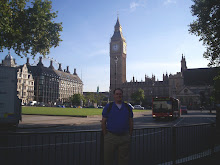
The Highest Court in the Realm

Today, the House of Lords handed down the last judicial decisions it will ever make.  That is because the UK is getting a supreme court.  Since the Middle Ages, the highest court in the UK was the House of Lords, which is also the second legislative house of Parliament.  Twelve senior judges sit in the Lords and handle all the legal appeals that come before the body and these twelve jurists are known as the Law Lords.  These twelve, and only these twelve, are allowed to rule on judicial cases.  As members of the House of Lords, the twelve Law Lords can participate in debates and vote on legislation.  However, most wait until after they retire from the legal profession to participate in the legislative affairs in the Lords.

All of that changes in October when the UK Supreme Court starts to hear cases.  In accordance with the Constitutional Reform Act of 2005, The Supreme Court of the United Kingdom will take over the legal function of the House of Lords.  The current Law Lords will become the first justices and succeeding justice will be appointed by the Queen on the advice of the Prime Minister.  One key feature will be that, unlike the U.S. Supreme Court, proceedings of the UK Supreme Court will televised.

Every political system has its anachronisms(The goings on in the U.S. Senate come to mind), but some countries seem to be able to reform their systems when the need arises.  The UK seems just such a country.

Tuesday, July 28, 2009

Book Review

On my honeymoon I picked up William Hague's biography of William Wilberforce from the The Parliamentary Bookshop.  Hague is an MP and served in later cabinets of John Major.  In 1997 Hague became leader of the Conservative Party but left the leadership after the Tories landslide defat in 2001 general election.  Hague returned to the frontbench when David Cameron made Hague the shadow foreign secretary.  During his sojourn on the backbenches, Hague turned his attention to the political leaders of the late 18th and early 19th century.  Hague wrote a biogrpahy of the great Prime Minister William Pitt the Younger.

The story of William Wilberforce is a marvelous one, and Hague tells it well.  He puts Wilberforce's drive to abolish the slave trade squarely within Wilberforce's own beliefs in evangelical Christianity.  Hague also demonstrates how Wilberforce was essentially a conservative man determined to pursue the radical goal of abolishing the slave trade.

The fight to abolish the slave trade took twenty years and the fight to completely abolish slavery went on for another 17 years.  Hague's real talent comes from situating Wilberforce's crusade within the larger historical movements of the early 19th century.  For instance, the greatest setbacks to Wilberforce's attempts to end the slave trade came as a result of actions in France.  Hague also does a good job of dealing with Wilberforce's work inside the House of Commons.  There are extended sections dealing with elections in the early 19th century and also on how Parliament conducted its business.  With Wilberforce such a towering political figure, the book also gives insights to the political issues of the day; including how politicians and the royal family interacted.

Hague also includes Wilberforce's non- political affairs.  Wilberforce contributed much to evangelical thought in early 19th century Britain, and the book shows how much of Wilberforce's life centered around religion.  Wilberforce and his relationship with his family are detailed but not as much as some other relationships.  One of the best parts is how many people came through Wilberforce's life; everyone from John Newton to William Pitt to the Royal Family.  Wilberforce was at the center of British political life and the book can give a reader some insight into life in early 19th century Britain.  

A lot of times I find books written by British authors to be a little dense to get through.  Wilberforce took some time to get through but that is because the book is so meaty.  However, Hague's style makes the book accessible and a real informative treat to read.


Sunday, July 26, 2009

Backbencher of the Week

This week a sub-committee of the House Judiciary Committee passed the Fairness in Cocaine Sentencing Act.  The at is designed to end the sentencing disparity between powder and crack cocaine.  Crimes involving crack cocaine are often sentenced at a rate 100 times higher then powder cocaine, and this difference disproportionately affects African-Americans.  The bill still has to pass the entire Judiciary Committee and both the full House and Senate.  However, during the confirmation hearings for Judge Sotomayor, Sen. Jeff Sessions(R-AL) seemed to indicate that the Senate wold pass a bill to rectify the disparity.

The sponsor of the Fairness in Cocaine Sentencing act is Rep. Bobby Scott(D-VA-3) and he is this week's Backbencher of the Week.  There is still a long a lot work that needs to be done to bring sanity to our system of dealing with illegal drugs.  However, the work of Rep. Scott is an important step towards bringing a sense of fairness to how the justice system deals with narcotics.  Congratulations to Rep. Bobby Scott for bringing some fairness to our justice system and for being Backbencher of the Week.

If it Weren't for Bad Luck

Even though Parliament is now in its summer recess, there is still some political goings on.  This week there was a by-election in the constituency of Norwich North.  The by-election came about because the former MP, a Labour member named Ian Gibson, was forced out in the expenses scandal.  Local Labour leaders, and Gibson himself, thought that the Prime Minister and national Labour official formed a "star chamber" and  made Gibson a scape goat.  The result was that Labour voters stayed home and a 5,000 vote Labour majority turned into a 7,000 vote Conservative majority.

A ruling party losing a by-election is not that uncommon and often marks a party on its way out.  John Major saw his majority of 22 turn into a minority of -1 by the time of the 1997 general election.  However, there are a couple of things to take away from this by-election.  First is that people are as angry about how Brown handled the expenses scandal as much as they are upset over the scandal.  Second is that Labour does not have an effective attack against the Tories.  Labour tried at attack the Tories over the possibility of a Conservative government making spending cuts but the attacks had no effect.

There was the usual grumbling from Labour quarters about Brown's leadership but again the opposition is not yet strong enough to topple the Prime Minister and Labour is now looking to electoral reform as its main issues.

In the meantime, Chloe Smith is now the the youngest member of Parliament and has a year to use incumbency to strengthen herself for what appears to be a good election for the Tories.  The Backbencher congratulates Chloe Smith on her election.

Rickey be Rickey

This weekend is the Baseball Hall of fame induction weekend and one of the inductees is Rickey Henderson.  As a boy growing up in the San Francisco Bay Area, Ricky Henderson was one of the first sports icons that I can remember.  I still recall watching TV and following his chase to break the stolen base mark, and I also remember being excited to skip church one Sunday to drive out to Oakland to see Ricky and the Oakland A's play.  What makes Henderson such an icon is more than his skills, and as the greatest lead-off hitter of all time his skills are prodigious, but the stories that surround him.  Here are some of my favorites

Once Ricky was getting on the team bus after a game and he was looking for a seat.  Tony Gwynn told him he could sit at the front of the bus because he had tenure.  "Ten year," Henderson said, "Ricky has fifteen years in the majors."

Another time, team officials noticed that there books were A million dollars off.  After looking into the matter they discovered Ricky had not deposited one of his checks.  When they asked why Ricky had not deposited the check, he said that he framed it on his wall. 

One year, Ricky was interested in playing for the San Diego Padres and he called Padres General Manager Kevin Towers and left the following message, "This is Rickey calling on behalf of Rickey.  Rickey wants to play baseball."

One time Dan Patrick asked Rickey about his chances of coming back to play baseball and Rickey said, "My condition is in good condition."

Anyway, congratulations to Rickey Henderson for making the Hall of Fame.

Saturday, July 25, 2009

This Week in Misogyny

Democrats for Life kicked Rep. Tim Ryan(D-OH-17) off its board because Rep. Ryan supports legislation that attempts to reduce the need for abortions by increasing access to contraception.  Ryan responded by calling Democrats for Life "a fringe group", and also said "I can't figure out for the life of me how to stop pregnancies without contraception."  I am glad that Rep. Ryan realized that much of the anti-abortion movement is in reality anti-woman and anti-sex.  

In Ohio a Republican state legislator named John Adams introduced a bill that would make it illegal for a woman to get an abortion without the written consent of the father.  If the woman cannot identify the father then there can be no abortion.  There are also criminal penalties for women seeking abortions without the father's permission.  This is some high quality misogynistic wankery that puts a man in complete control over the body of any woman he impregnates; 13th amendment be damned.  Nice job Mr. Adams, you have the set the bar on misogynistic wankery pretty high.